Public Enemy, “Can’t Truss It” video
My brother and I grew up in a sheltered religious household. And like a lot of kids in the early 90s, our parents forbade us from listening to heavy metal or rap because it was “dangerous” and sometimes “demonic.”
What we associated the word “rap” with as kids was relatively tame. My brother and I had cassettes by DJ Jazzy Jeff & The Fresh Prince, MC Hammer and the like. But there was one cultural phenomenon that quickly broadened our love for hip-hop.
We had a small, portable black & white TV that only tuned in UHF channels. There was a channel called The Jukebox that came in on channel 58. You could call a 900 number (which would put an extra charge on your phone bill) and request a music video. At the time we started watching it, it was dominated by hip-hop and R&B artists. It was quite the alternative to typical MTV airplay. (If you’re curious about the cultural impact of that channel, later called “The Box,” this is a great article: https://www.thrillist.com/entertainment/nation/the-box-tv-channel-changed-music )
As we huddled around that TV on the floor of my brother’s room, constantly adjusting the antennas to avoid static, we discovered a world of hip-hop we had never heard before. Beats and samples that went so fucking hard, lots of explicit lyrics, and messages and stories from a world we knew nothing about. Instead of rejecting it out of the guilt our parents tried to impose upon us, we both fell in love.
There are so many artists and songs that I first heard on that channel that I will likely write about, but I had to start with Public Enemy. They would plant the first seeds in my head of critically thinking and reexamining everything I was taught about racism.
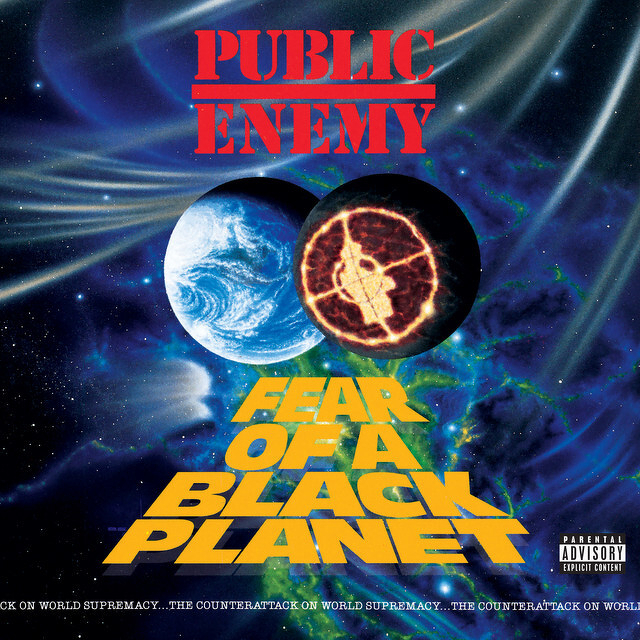
I honestly could’ve just made this post entirely about their album Fear Of A Black Planet. An absolute masterpiece. But for one, I didn’t actually own and listen to that entire album until I was older. And I also wanted to make sure to include a couple of songs that weren’t on that album.
Public Enemy were one of the pioneers of turning rap into a platform for targeting political issues and racial injustice. Most of the previous rap records released in the 80s had steered clear of that. The music they put out would change hip-hop forever, truly putting it on the mainstream map and making sure, whether people liked it or not, that everyone heard their message.
Also, as far as what really caught my ear when I first heard them, was the production. That’s generally what draws me to any music first. The instrumentation and percussion of a song will pull me in, and only then will I typically start paying attention to the lyrics.
If you want to hear a masterclass in sampling, Fear Of A Black Planet is it. I couldn’t tell you how many samples total as this was created during what some call “the golden age of Hip-Hop,” because it was before record labels and lawyers were paying attention. But at a glance, it appears each track has anywhere from 10-25 each, and that’s just the credited ones. What the Bomb Squad did with the samples though, paired with Terminator X’s furious scratching throughout, that’s what I was floored by. It created a chaotic cacophony that somehow sounded amazing and really complemented the powerful lyrics of Chuck D. To quote the bio of this album on Apple Music, “barbed shards of funk and soul elbow for space, packed tighter than ever before.” They literally brought the noise.
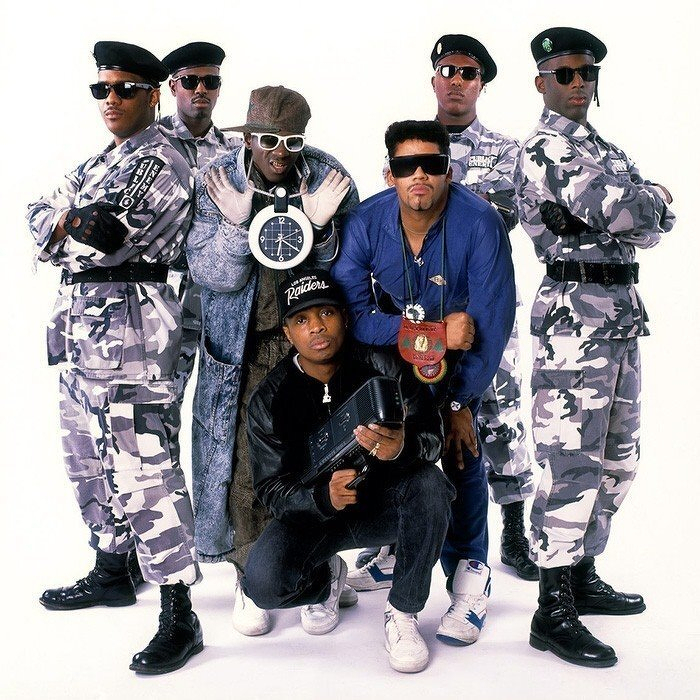
A big part of what I latched on to as well was their presence and image in their videos. Chuck D by himself wasn’t particularly standing out in that regard, but Flavor Flav wowed me. Always wearing a clock around his neck, donning crazy hats and sunglasses, and dripped in brightly colored outfits. You couldn’t ignore him, and it was a signature style no one ever replicated. A lot of people see Flav as a comic caricature, especially later on when the reality show Flavor Of Love was on the air. But his lyrics went toe-to-toe with Chuck D, and were arguably just as impactful. And of course, the presence of Terminator X and the S1W backing up the duo, making it clear that they were not a force to be fucked with.
Then when I was already hooked on their songs and videos, I started to really listen to what Chuck D and Flavor Flav were saying, and I was shocked and confused but also intrigued. No one had ever told me about the things they were addressing, and to be honest I had a hard time reconciling that in my head with what I thought I already knew.
“911 Is A Joke”
I can’t remember if I heard this or “Fight The Power” first, but “911 Is A Joke” is what drew my focus to the group. I love the way it’s a commentary about how a life-saving public health service fails minority and disadvantaged neighborhoods, while also being a crazy good dance jam with an extremely infectious hook at the same time. Shit, since I started writing this, I’ve had “Uh get up, a-get get get down” stuck in my head for days. It’s easily the most dance-inducing track I’ve heard by them.
There’s definitely a comedic element to it as well. It’s hard not to laugh at lines like “thinking you are first when you really are TENTH??” And you can hear a relatively more cohesive ensemble of beats and samples, making for a really entertaining and accessible track. The samples are particularly clever and well placed, one of my favorites being the Vincent Price laugh from MJ’s “Thriller.”
The video made it even more hilarious: the way he swaps between rapping in pajamas inside an open casket, to dancing and preaching to a congregation from a pulpit, backed by a gospel choir who doesn’t really “sing” so much as chant the title of the song and a few call and response shouts of “OW!” And then they cut to some friends walking at night that suddenly call 911 because one of them is having seizures, then later at the end of the video, the guy is still having seizures the next day in the same spot on the sidewalk, with no ambulance in sight.
But you know, hearing this as a kid growing up in the predominantly-white suburbs, I remember thinking, “Is that really true?” I had always thought they were pretty efficient from what I’d seen, and yeah, they were, for our community. Yet, why would they lie, right?
I didn’t understand until much later the real reasons for the disparity, but I at least began to recognize it, even though I still found it slightly unbelievable.
“Burn Hollywood Burn”
I found this track to be pretty relatable as an adult who is part of a different minority group. The lyrics put a stark spotlight on cinema only portraying black characters as stereotypes or caricatures, instead of being representative of real people. In the same breath, it calls out television and the media as well, tending to always paint black folk as criminals or some other undesirable facet of society.
While not exactly the same, I had felt this way for years regarding the portrayal of queer folk in the media, as hyperbolic versions of very narrow vignettes that were misrepresenting the majority of us. It was always the extra-effeminate comic relief that, if the character even mentioned sexuality at all, it was in double-entendres meant to get a laugh by way of shocking the audience. Don’t get me wrong; I’ve met gay men like that and there’s nothing wrong with them presenting that way. But it never represented me at all. Also they might have been portrayed as villainous or in some negative fashion, or at the very worst, dying of AIDS, looking frail and diseased until their inevitable demise, usually completely alone. As if to say just being a homosexual was a death sentence.
Before even really criticizing movies, Chuck D’s verse calls out the news' relentless hyperfocus on stories of shootings and violence caused by black men, asserting: “So all I hear about is shots ringin' out / About gangs puttin' each other’s head out.” I’m not going to lie. As a teenager I had developed an irrational fear of black people, that looking back, was heavily influenced by what I heard and saw on the news. And my parents and other white authority figures in my life only reinforced this fear. It’s not that the violence was all made up. It’s just that you never heard on the news about black people doing anything else. There was a convenient omittance of positive stories from their demographic.
My mom and dad were quick to always say they were “not prejudiced.” I believed them back then. My dad still says that phrase to this day. But you know, like many white parents back then, they would teach me not to discriminate against “good” blacks, but also telling me to be wary of the “bad” ones. They put ideas in my head that if they would just try hard in school and get decent jobs, they would rise above their environment. Easy, right?
So I did my best to make distinctions like this. The Cosby Show (lol), black anchormen on the news, Denzel Washington, black Christians… these must be the “good” ones. And the rest were to be feared. I couldn’t look most of my black schoolmates in the eye, and I was even more afraid of talking to them. One time there was a (gang-related? at least that was the news portrayal) shooting at the mall across from our middle school that I always went to play arcade games at, and my parents didn’t want us going back there on our own for quite awhile.
And even listening to black artists' music, a lot of them would speak out against their own kind killing each other. Which made me think “yeah! you tell ‘em!” I’m not proud of it. I know I was missing a big part of the point. But this was the way the environment I was in influenced me.
Chuck then quickly dives into the crux of the song, as a strong protest against Hollywood’s portrayal of black characters: “For all the years we looked like clowns / the joke is over, smell the smoke from all around.” At the time, I didn’t quite grasp the big picture. The things I know about now: minstrel shows/blackface, unnecessary or negative stereotypes, the white savior complex… it would be a long time before I learned about these.
All I knew back then is what I heard in the song. These guys were PISSED OFF about films like Driving Miss Daisy. Which again, planted a seed, in the form of questions: “What’s wrong with that movie? Why do they hate it? They must have a reason, what is it?”
I also remember when I was young being really excited if a song by an artist I loved had a cameo from other artists I loved. (Okay, maybe I still get excited about a good cameo.) Ice Cube and Big Daddy Kane each contribute a powerful verse to this track. Cube takes his moment to pivot the message towards police and their frequent racial profiling. Kane follows up nicely, swinging back to film, shining a spotlight of scathing criticism of the limited roles for black characters: “In the movies, portraying the roles / of butlers and maids, slaves and hoes.” And he wraps it up with a call to action: “So let’s make our own movies like Spike Lee.” This is my favorite verse on the track.
The outro is a couple of quick sketches by the four, and I was hearing names I’d never heard of before, like Huey P. Newton and Black Caesar that piqued my curiosity. Unfortunately this was before the internet, so I couldn’t Google these names to learn more, and they sure as hell weren’t teaching us about these things in school.
“Can’t Truss It”
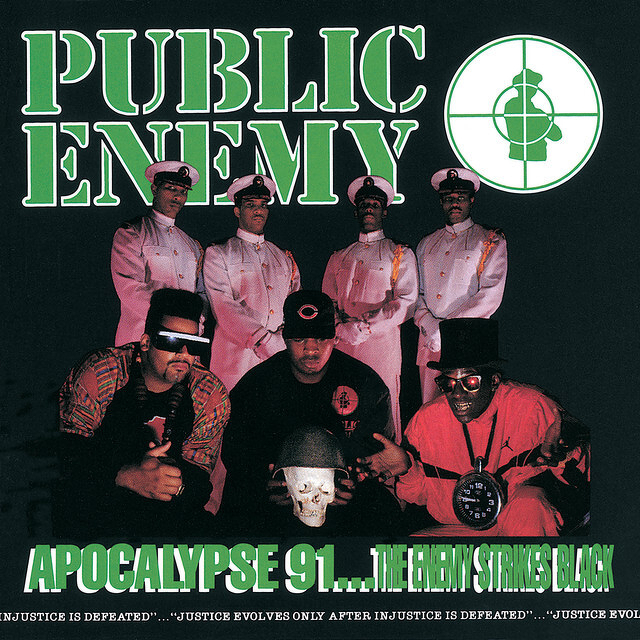
I heard this one later on, when the album Apocalypse ‘91… The Enemy Strikes Black came out. I was in middle school for the two songs mentioned above, but this dropped literally a few days after I started my first year of high school. This was my favorite PE track I had heard to date. I didn’t really know the words but I loved to chant along with a repeated “Can’t truss it!” in the chorus.
I entered high school thinking that I could forge a new, cooler identity than that kid that got bullied a lot in middle school. Maybe I didn’t have the clothes or the charisma but I liked damn good music, and I thought that would carry me.
I wasn’t long into freshman year before I found myself changing in the gym locker room, and two of my (incidentally) black classmates decided to start wailing on me with repeated punches to the head. I’m still not entirely sure why; I just assume I was an easy target for bullies. In a desperate attempt to just get them to stop I shouted something to the effect “Dude, I’m cool! I listen to rap!” Yeesh. Keyword: desperate.
They did stop punching me, at least, but only to ridicule me for my statement. They asked in an “oh yeah?” fashion what rap I listened to, and I mentioned this song. They laughed their asses off, like I had no idea what I was talking about. I mean, I didn’t. But there was no right answer there. At least they left me alone after that. It’s a bad memory I always associate with this song, but it didn’t change my love for it.
This song goes fucking HARD. The intro features a sample of Malcolm X speaking out against leaders who would say non-violent protest is the only way forward. I certainly did not understand this message back then, if I even heard it clearly. I was always taught by teachers and my parents that MLK’s style of peaceful protest was the only “right” method. Violence was “never the answer.”
I remember later watching the 1992 L.A. Riots on TV, wide-eyed and confused. I understood Rodney King being needlessly beaten. I also understood the police not being held accountable. But how could anyone justify such mass chaotic violence and looting? It didn’t register in my young brain.
I came to understand much more recently that peaceful protest can only do so much. It was an intertwining of my experience of committing to the fight against oppression of my own queer community, and also, like many of us white folks in 2020, suddenly seeing things much clearer following the murder of George Floyd, and wanting to help those who are more marginalized than myself. Oppressors will never return the favor of peace. Sometimes you have to take extreme measures to make these fuckers finally pay attention and affect change.
The sample drops out, and in an unusual but powerful way to kick off the beat, Chuck shouts “Here come the drums!” in unison with Flav shouting “Confusion!” Like “here come the drum-sion” or something. And then comes the catchy trumpet sample and the iconic opening line “Bass in your face, not an 8-track!” In the first 50 seconds they have pulled the listener in and demanded their attention.
I’m also a sucker for samples of singers from Asia, the Middle-East, Africa etc that get worked into Hip-Hop songs, so the brief vocal of the Israeli singer Ofra Haza on loop through the 2nd and 3rd chorus I found really appealing. (See also: M/A/R/R/S’ “Pump Up The Volume” sampling a Lebanese vocal.)
Then, the imagery of the video paired with the rhymes illustrates an allegory equating slavery with the systemic bondage of the black community that’s still going on, the implication being that slavery never really ended.
I definitely knew slavery was outright wrong. But even after seeing and hearing this song, I didn’t quite grasp the comparison. They were free now, right? Everything is desegregated these days, isn’t it? Yet like so many songs from my childhood, they were the seeds planted that would become an “a-ha!” moment much later in adulthood.
“Fight The Power”
The best protest song of all time, hands down. I doubt most would argue with me. The thing is, the lyrics require very little exposition because in many ways the power of it comes more from the “Funky Drummer” beat (always a fan of that one), the samples like the constant shout of “Yes!” and the repetitious chanting of the title that hypes you up and energizes you to action.
This is not to say the lyrics aren’t important. It’s just that unlike many of their other songs, there’s less exposure and teaching of historic facts that were hidden, and more of a call to come together, to elevate and protect each other and ourselves, and stand united against injustice.
Chuck does do a little bit of that signature criticism in the 3rd verse, calling out Elvis and John Wayne for their abject racism that often went unmentioned. This was pretty crucial to my young ears, as my mom loved Elvis and my grandpa really loved John Wayne. And I had to wonder again why those typically revered figures were being slammed in the song.
But that aside, the song is more of a powerful force for protest than inspiring critical thinking of history.
Even more influential on my young mind than the song itself was the music video. It wasn’t just a video, it was an event. The song was created as a collaboration with Spike Lee to be the theme for his film “Do The Right Thing.” Fittingly, he also directed the video. I honestly don’t know who else could’ve made this video so impactful.
It opens on a block party in Brooklyn, packed with a crowd of people dancing and shouting, and as the camera moves forward you see a stage, with the words “Fight The Power” in military-style stencil lettering above an image of Malcom X on the right and the Public Enemy logo with the man in crosshairs on the left. The crowd continues to dance and shout as Chuck and Flav make their way through. Terminator X stood tall and stone-faced, looming right behind them, and Professor Griff and S1W holding up the rear, occasionally doing military-style choregraphed dances to the song. Absolutely enrapturing, to be sure.
I almost feel like I have to apologize for the way my young eyes interpreted this. I felt that same unjustifiable yet learned fear I wrote about above. “I don’t belong there” was the thought running through my head. I also felt like I never wanted to be anywhere near there. Because of conditioning, I expected disorder and violence when I saw a large group of African-Americans in one place. And if I was there, surely I would get shot. But at the same time, it also looked like so much fun. And in that way, I wished I felt like I could join.
What I couldn’t see until much later is how necessary and joyful it really was. In June 2020 my husband and I decided we would go downtown to march in a Black Lives Matter protest in downtown Austin. I had never done anything like that before. There were a lot of combined fears happening here that made me want to talk myself out of it. But not the same irrational fear as I mentioned above. The main fear was COVID, obviously. I was also afraid to take up space in a protest that I might not really belong in. And also I was afraid of getting caught in the violence of the police; a couple days before they had deployed pepper spray and rubber bullets against the crowd, resulting in a lot of injuries.
But we went. We felt like it was too important to miss. And it wound up being a really wonderful experience. It wasn’t difficult. You just had to march with everyone and follow the lead of the guy with the megaphone to chant in protest. And there were a lot of allies like us interspersed into the crowd as well. We were welcome there.
To turn to one end of the street and back to the other and see no end to the crown on either side… that was powerful. And it gave me hope, that there are more good people in the world than I gave it credit for.
And so, looking back at that video now, I can really see it for what it really is. In fact, in that 2020 march, there was a guy on a motorcycle with a giant boombox, and he alternated blasting this song with Kendrick Lamar’s “Alright.” (Second best protest song of all time.) I could see in person the powerful effect of “Fight The Power.” Even though I had it all wrong back then, the song would always stay with me as a favorite. And to belabor the point, it planted more seeds.
Other Important Mentions
“Brothers Gonna Work It Out” and “Welcome To The Terrordome” are tracks I love for similar reasons. They really bring out that chaotic sound of clashing samples that I absolutely love about Fear Of A Black Planet, and honestly that style of cacophony was something I loved about a lot of that earlier rap sound, in tracks by N.W.A., Above The Law, MC Breed etc. That Prince guitar sample that just relentlessly repeats through “Brothers Gonna Work It Out” and how it clashes with the beat and the other samples is the best example I can think of. It shouldn’t work but it does, really well in fact. “Welcome to The Terrordome” is less pronounced in that way but that last note of the intro riff is just sheer noisy chaos. Delightful.
“Bring Tha Noize (ft. Anthrax)” is just sheer fun. Not gonna lie but I couldn’t name a single song by Anthrax other than this one. But the rap/rock combo is a formula that has stood the test of time, and broadens either genre to a larger listening demographic. I love the juxtaposition of distorted guitars and double-bass pedal against drum samples and raps. And Scott Ian is a surprisingly good rapper.
I’m also a fan of Chuck D’s cameos on “Kool Thing” by Sonic Youth and “New Agenda” by Janet Jackson. It’s not entirely surprising that Chuck worked with Sonic Youth; Public Enemy arguably gives hip-hop a punk vibe. Also, I appreciate that with either of these songs he has no issue being backup to these two legendary female artists (Janet and Kim Gordon I mean) and demonstrates he’s also a feminist.
Lastly I feel like I have to mention “Don’t Believe The Hype” even though I didn’t really know that track well back in the day. I think mostly why I even knew of it was because of its mention in a few of their other songs, mixing that song title in with other sets of lyrics. It’s like an important motif for the group’s music.
Public Enemy was the first rap group to affect me this way, but certainly wouldn’t be the last. Music is such a powerful vehicle for important stories, messages and lessons. And they were messages kids like me needed to hear.
I’ve learned a lot over the years about allyship to the black community. And I’ve also used what I’ve learned from their struggles as key reminders for how to fight for my own community’s equality: when to shout, when to be quiet, when to fight, when to run and so on.
But of course, I will never be done learning. That’s the point, right? Be always willing to learn, evolve, listen and be called out. Shit, I probably got something in this blog wrong. (So please call me out!)
All I know for sure is all marginalized groups that suffer from discrimination need to stand together and support each other, and be willing to keep a dialogue open to understand each other as well.